Explainers
Degrees of freedom in humanoid robots: what the number means
Short answer: A degree of freedom (DoF) is one independent way a joint can move, such as bending a knee or rotating a wrist. A humanoid's DoF count adds up all of them. Published numbers range widely: Unitree lists 23 for the base G1 and up to 43 for the G1 EDU with hands, 27 for the H1-2, and Boston Dynamics lists 56 for the electric Atlas. More DoF usually means more dexterity, but also more motors, cost, weight and control complexity.
Counting joints. A human arm is often described as having seven: three at the shoulder, one at the elbow and three at the wrist. Robot makers usually give fewer. Unitree's spec sheet for the base G1 breaks its 23 down as 6 per leg, 1 at the waist and 5 per arm. The G1 EDU can add 2 more waist joints and 2 more wrist joints per arm.
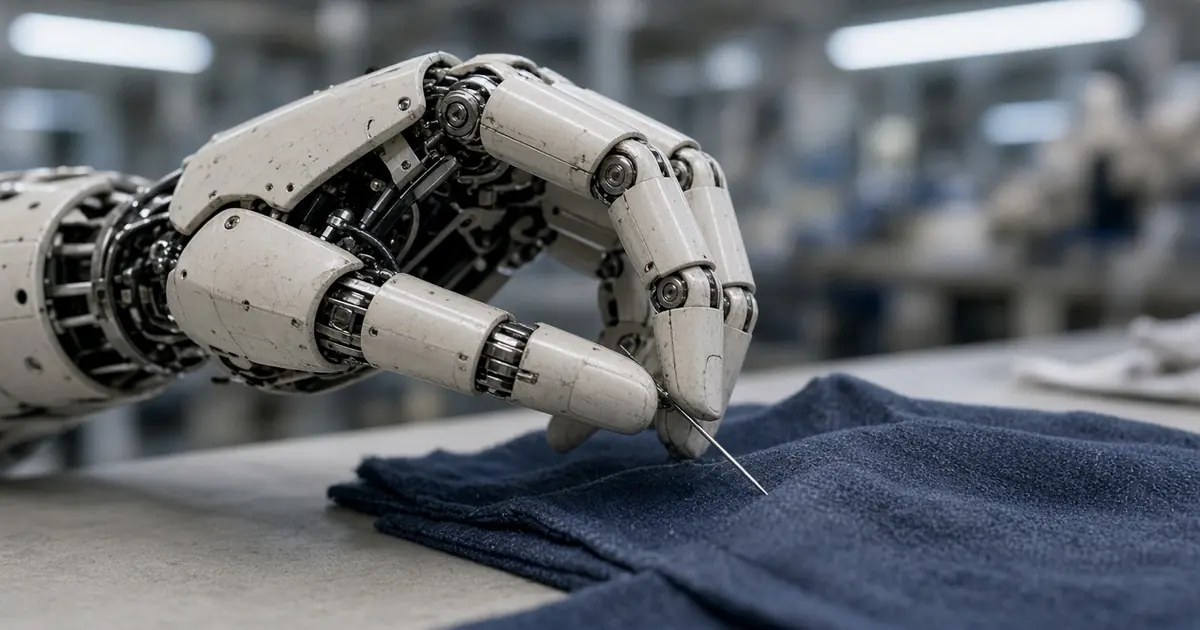
Hands add the most. Hands are where counts jump. Unitree's optional Dex3-1 three-fingered hand for the G1 EDU has 7 degrees of freedom: 3 in the thumb and 2 each in the index and middle fingers. That is why the G1 EDU's total can reach 43 while the base G1 has 23.
Why more is not always better. Each extra joint needs an actuator, a sensor and wiring, and the AI has to coordinate it. A warehouse robot moving totes may not need individual finger joints; a robot folding laundry probably does. Figure says its Helix model controls the whole upper body, including individual fingers, which is one reason it describes Helix as a step forward; see VLA models explained.
Range of motion matters too. Two robots with the same DoF can differ in how far each joint turns. Unitree lists G1 waist rotation of plus or minus 155 degrees and knee bend of 0 to 165 degrees. Boston Dynamics lists Atlas's range of motion as continuous. Specs for these robots are in Unitree G1 vs H1 and electric Atlas explained.