Research
Google opens Gemini Robotics ER 2, a high-level 'robot brain' model, to cloud customers in public preview
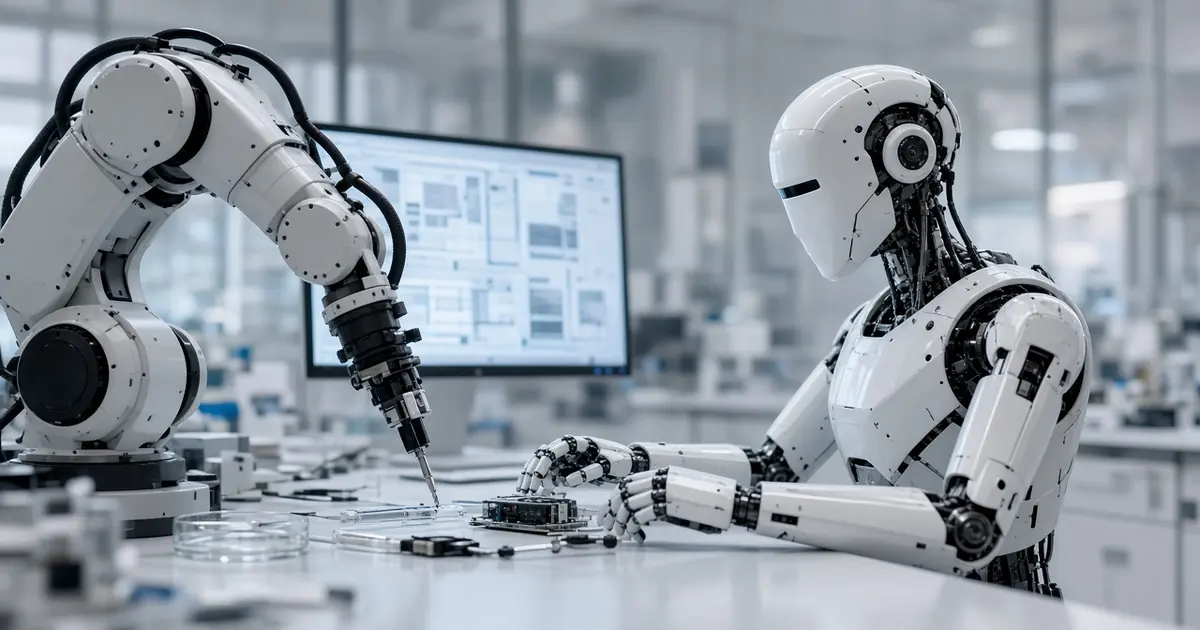
Short answer: Google has made Gemini Robotics Embodied Reasoning 2 (ER 2) available in public preview on its Gemini platform, according to a Google Cloud blog post published on 27 October 2026 by Carolina Parada, head of Google DeepMind's robotics team, and Adrian Jones. Google describes ER 2 as a robot's high-level reasoning model that plans multi-step tasks and directs lower-level control systems, and says it works across robot types from stationary arms to full humanoids.
In Google's description, ER 2 does not move motors directly. Developers declare low-level interfaces, such as vision-language-action (VLA) models, navigation APIs or custom functions, as tools that the model can call, and stream video, audio or text into it. Google says the model can then plan long tasks involving hundreds of decisions, check from video whether a step actually succeeded, retry failed steps without restarting a whole workflow, and coordinate teams of different robots that share an understanding of the workspace.
The post gives some company-reported figures: Google says ER 2 pinpoints the video frame at which a key event happens, such as when to stop pouring a liquid, with 91.3% accuracy and a mean error of 0.96 seconds, and that it can read values from more than ten kinds of instruments, including dials, sight glasses, digital displays and thermometers. Google also points to tooling for testing behaviours in simulators such as MuJoCo-Warp and NVIDIA Isaac Sim, labelling demonstration videos, and training custom VLA models on its cloud.
The announcement includes supportive comments from Boston Dynamics about its Spot quadruped inspection product, from data-collection start-up DeepReach, from Arm, and from A*STAR's materials research institute, which said it wants to use the model to help lab robots work with existing equipment. Google did not publish pricing in the post itself; it links to separate documentation and a DeepMind technical report. For other recent work on humanoid foundation models, see our report on Alibaba Amap's Lambda-0 and our research hub.